
listen…
We often celebrate the bold pioneers who cross oceans for the Gospel, but we sometimes overlook the small shadows walking beside them. While missionary parents answer a divine call to sacrifice comfort and security, their children—Missionary Kids (MKs)—live that sacrifice every single day, often without a choice in the matter.
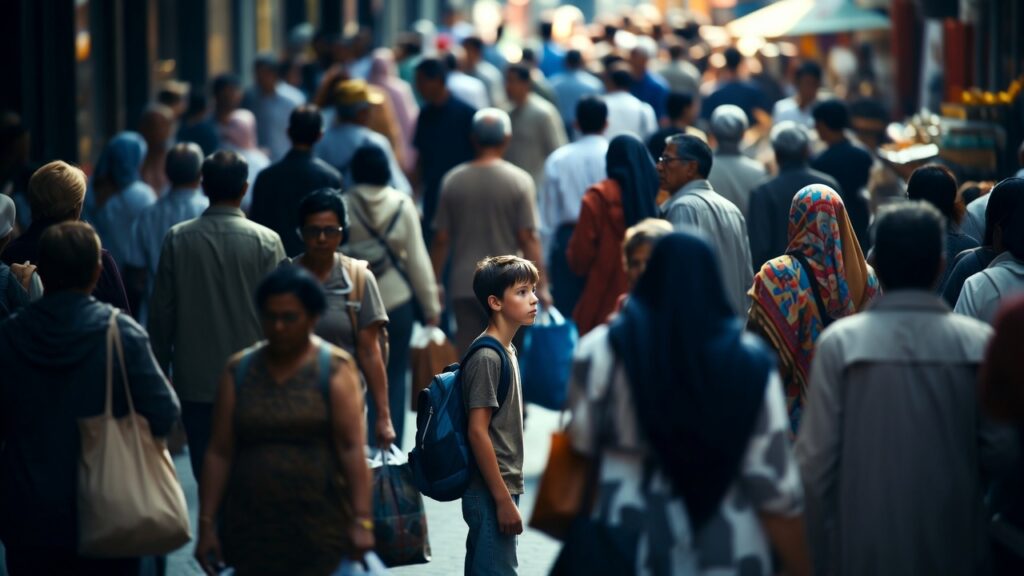
These children are what researchers call Third Culture Kids (TCKs). They are not simply a product of their parents’ home culture, nor are they fully assimilated into their host culture. Instead, they exist in the “third culture”—a unique, blended identity created by the intersection of the two. While they often grow into remarkably adaptable, global-minded adults, they navigate a journey marked by a paradox: they are world travelers who frequently feel they have no place to truly call home. To support them, we must look past the “perfect” family photos and minister to the “hidden” mission field of their hearts.
1. Living in the “In-Between”
The Fragile Beauty of a Third Culture Identity
For an MK, identity is a moving target. When they are on the mission field, they are seen as “American” or “foreigners.” Yet, when they return to their passport country for furlough, they feel like strangers among their own peers, lacking the shared cultural shorthand of music, sports, or local trends. They live in a perpetual “in-between.”
This blending of worlds creates a unique third culture, but it can leave a child asking, “Where do I belong?” or “Who am I really?” As we walk alongside these families, we must remind these children that their earthly uncertainty mirrors a profound spiritual reality.
“Dearly beloved, I beseech you as strangers and pilgrims…” —1 Peter 2:11 (KJV)
Their struggle to “fit in” is not a failure; it is a lived reflection of our status as citizens of a heavenly kingdom. Their identity is not rooted in a zip code, but in their unchanging status in Christ.
2. Life Measured by Airports, Not Birthdays
Finding an Anchor Amidst the Screech of Packing Tape
For many MKs, the defining sound of childhood isn’t a school bell, but the rhythmic screech of packing tape sealing another box. Their lives are measured by airport terminals and sterile departure gates rather than birthdays or grade levels. What a typical child might experience once—a major move—an MK may experience dozens of times.
Each transition is a series of profound losses: favorite teachers, grandparents, church families, pets, neighborhoods, sports teams, and even favorite restaurants. The cumulative impact of this “constant transition” can be staggering. We must help these children see that while their geography is fluid, God’s presence is the one constant.
“Have not I commanded thee? Be strong and of a good courage; be not afraid, neither be thou dismayed: for the LORD thy God is with thee whithersoever thou goest.” —Joshua 1:9 (KJV)
3. The Heavy Weight of the “Perfect MK”
Shattering the Mask of Performance-Based Ministry
There is an invisible weight that many missionary children carry: the pressure to be a “perfect” representative. They feel the eyes of mission boards, supporting churches, and their parents’ donors upon them. They begin to believe that their value is tied to “ministry numbers” or their ability to always smile and recite a Bible verse in a foreign language.
This lead to a dangerous perfectionism where a child feels they can never admit to struggling. We must replace this performance-based mindset with the Gospel of grace. We need to tell our MKs: Your worth is not found in how well you represent the mission, but in how well you are loved by the Father.
“My grace is sufficient for thee: for my strength is made perfect in weakness.” —2 Corinthians 12:9 (KJV)
4. The Critical Need for “Grief Permission”
Validating the Sacred Space of Hidden Mourning
Because missionary life requires resilience, MKs often become experts at saying goodbye, yet they rarely learn how to grieve. They are told to focus on the “joy of the mission,” which can inadvertently silence their pain. We must offer them “grief permission.”
Ministry to MKs often looks like “listening as ministry”—creating a safe space where they can be honest about their anger, disappointment, or loneliness. We must remind them that mourning is not a sign of spiritual weakness. After all, even Jesus wept. By allowing them to mourn what was left behind, we help them healthily embrace what God is preparing ahead.
“The LORD is nigh unto them that are of a broken heart…” —Psalm 34:18 (KJV)
5. Stability is Found in Presence, Not Geography
Building Resilience Through the Sanctuary of Family
Resilience is not the absence of stress, but the ability to navigate it within a secure environment. Our children rarely need “perfect” missionary parents; they need present parents. Home is less about a physical house than it is about the consistency of relationships.
Building stability happens in the small things: a consistent Friday family movie night, birthday traditions that travel across borders, and using technology to maintain long-distance friendships. These habits provide a “portable” sense of security.
Coping Tools for the Journey
| Challenge | Healthy Response |
| Anxiety | Pray specifically (Philippians 4:6–7) |
| Loneliness | Stay connected with friends via technology |
| Grief | Talk openly and journal feelings |
| Identity confusion | Study who you are in Christ |
| Frequent moves | Create familiar family traditions |
| Culture shock | Learn one new thing each day |
| Fear | Memorize promises from Scripture |
| Stress | Exercise, rest, and spend time outdoors |
6. Ancient Perspectives on a Modern Reality
Biblical Examples of the Third Culture Experience
The TCK experience is woven into the very fabric of Scripture. God has a history of using those who live between worlds to accomplish His greatest purposes:
- Joseph: Sold into Egypt and separated from everything familiar, he mastered a new culture and language. Yet, as Genesis 50:20 reminds us, God meant even the painful separation “unto good,” using Joseph’s cross-cultural position to save his people.
- Daniel: A teenager taken captive to Babylon, he had to navigate a different education, government, and language. His faithfulness was possible because his identity rested in God, not his surroundings.
- Esther: Raised between cultures, her unique understanding of two different worlds allowed her to stand in the gap for her people at a pivotal moment.
These examples offer our MKs a powerful hope: the very “in-between” status that feels like a burden today is a gift God can use for His glory tomorrow.
7. Conclusion: A Call to Support the Home Front
Caring for the hearts of missionary kids is a vital part of the global mission. They may never preach a sermon or plant a church themselves, but they are quiet veterans of the Great Commission.
To our supporting churches: your role is critical. Look past the ministry reports and see the children. A birthday card, an encouraging email, or a care package with a favorite snack can become a lifelong memory of being seen and valued.
As we applaud the parents for their sacrifices, let us not forget the small hearts that sacrifice alongside them. Will we continue to applaud the parents’ public victories while ignoring the quiet grief in the eyes of their children? Let us commit to pointing these “hidden missionaries” to the One who never changes, no matter how many times their world does.
“Casting all your care upon him; for he careth for you.” —1 Peter 5:7 (KJV)